
Your Cart is Empty
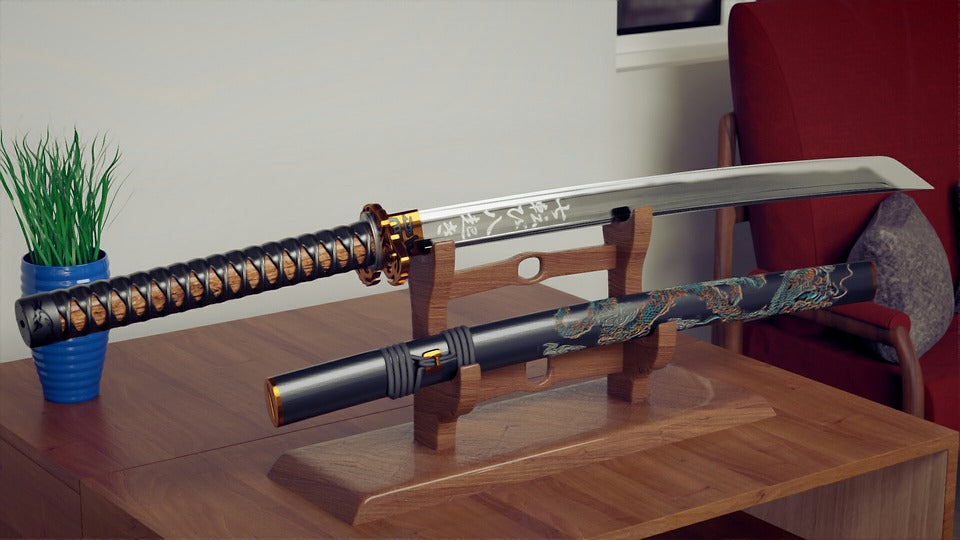

The traditional Japanese katana is among the world's most popular and prized swords. Invented many centuries ago in feudal Japan, it's characterized by a curved, single-edged blade with a hand guard. The katana proved instrumental in defining Japan's history, as it was the samurai warriors' preferred weapon.
With a longer blade and less curvature than its predecessor, the katana was a more formidable weapon for use against armored opponents. Of course, this was important when the Mongols invaded Japan, as the Mongolian army often wore boiled leather armor.
In addition to its long length and curved blade, however, another reason why the katana was such a power weapon is because of the way in which it was carried. Samurai warriors carried the katana in a very unique manner -- a manner that wasn't done with other swords. This offered several key benefits, some of which we're going to explore.
Buke-zukuri
Samurai warriors carried swords in a variety of ways throughout the region's history. Normally, however, samurai warriors carried the katana in a method called buke-zukuri. Basically, this means the katana was carried with the cutting edge facing up and the sheath through the sash ( obi).
Very rarely did a samurai warrior carry a katana without a sheath, as doing so would expose him to potentially self-injury. Instead, the samurai warrior would place the katana in a sheath, and then he would place the sheathed sword through a sash worn around his waist, ensuring that the katana's cutting edge was facing up.
So, what made the buke-zukuri the preferred method of carrying a katana? Previously, samurai warriors would carry their swords with the blade facing down. This allowed for greater comfort, especially when riding on horseback. However, because samurai warriors also wore armor, drawing the sword when it was worn this way was somewhat awkward. So, samurai warriors began to carry it with the cutting edge facing up. Whether they were armored or unarmored, carrying the katana with the cutting edge facing up allowed for a faster and more efficient drawing technique.
When the katana was worn cutting edge facing up, samurai warriors could draw it by performing one fluid motion. The samurai warrior would turn the sheath downward and immediately pull the katana slightly out of the sash with his left hand. Next, he would grip the hilt of the katana with his right hand and simultaneously slide the katana out.

What the habaki, tsuba, tsuka, menuki, fuchi, kashira and saya actually do, and how to choose each one when you design a custom katana. Illustrated with museum pieces from the Metropolitan Museum of Art.


Nasocoru
August 10, 2026
Richtig cool