Your Cart is Empty
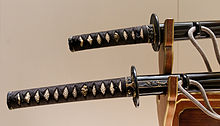

The katana and tachi are two of the most recognizable Japanese swords. Both originating many centuries ago during the country's feudal period, they were used extensively by samurai warriors. Both the katana and tachi share some striking similarities, including a single edge with a curved blade and tsuba (guard). Because of this, many people assume the two swords are the same. The truth, however, is that each sword has its own unique characteristics, some of which we're going to explore in this blog post.
The Tachi Came First
First and foremost, it's important to note that the tachi was invented before the katana. Historians believe that Japanese swordsmiths developed the tachi in the Koto period (900 to 1596), whereas the first use of the word "katana" didn't occur until the Kamakura period (1185 to 1333). As a result, it's believed the katana was designed using similar forging and construction techniques as its tachi predecessor.
The Katana Featured a Shorter Blade
Additionally, the katana was designed with a shorter blade than the tachi. Traditional Japanese tachis typically featured a blade length of 27 9/16 to 31 1/2 inches. In comparison, katanas featured a blade length of about 23 1/2 inches. The shorter blade made the katana a more versatile weapon, especially in close-quarter combat. It also allowed samurai warriors to draw the sword more quickly.
The Tachi Featured More Prominent Curvature
Both the katana and tachi featured a curved blade. However, the latter featured more prominent curvature than the former. You can typically distinguish the two swords by looking at the curvature of the blades. The tachi curved more deeply than its katana counterpart.
The Katana Was Worn Cutting Edge Up
Another key difference between the katana and tachi involves the way in which they were worn. Like nearly all other traditional Japanese swords -- and swords produced in other regions for that matter -- the tachi was worn with the cutting edge down. The katana, however, was unique in the sense that it was worn with the cutting edge up. By wearing the katana with the cutting up, samurai warriors could draw it more naturally.
Signature
Finally, the tachi was usually signed by the swordsmith who made it on the tang. Due to the way in which the katana was worn, the signature was reversed. Not all Japanese swords were signed. If they were, however, you can usually tell if it's a katana or tachi by looking at the placement of the signature.
These are just a few of the ways in which the Japanese katana differs from the tachi.

What the habaki, tsuba, tsuka, menuki, fuchi, kashira and saya actually do, and how to choose each one when you design a custom katana. Illustrated with museum pieces from the Metropolitan Museum of Art.