
Your Cart is Empty
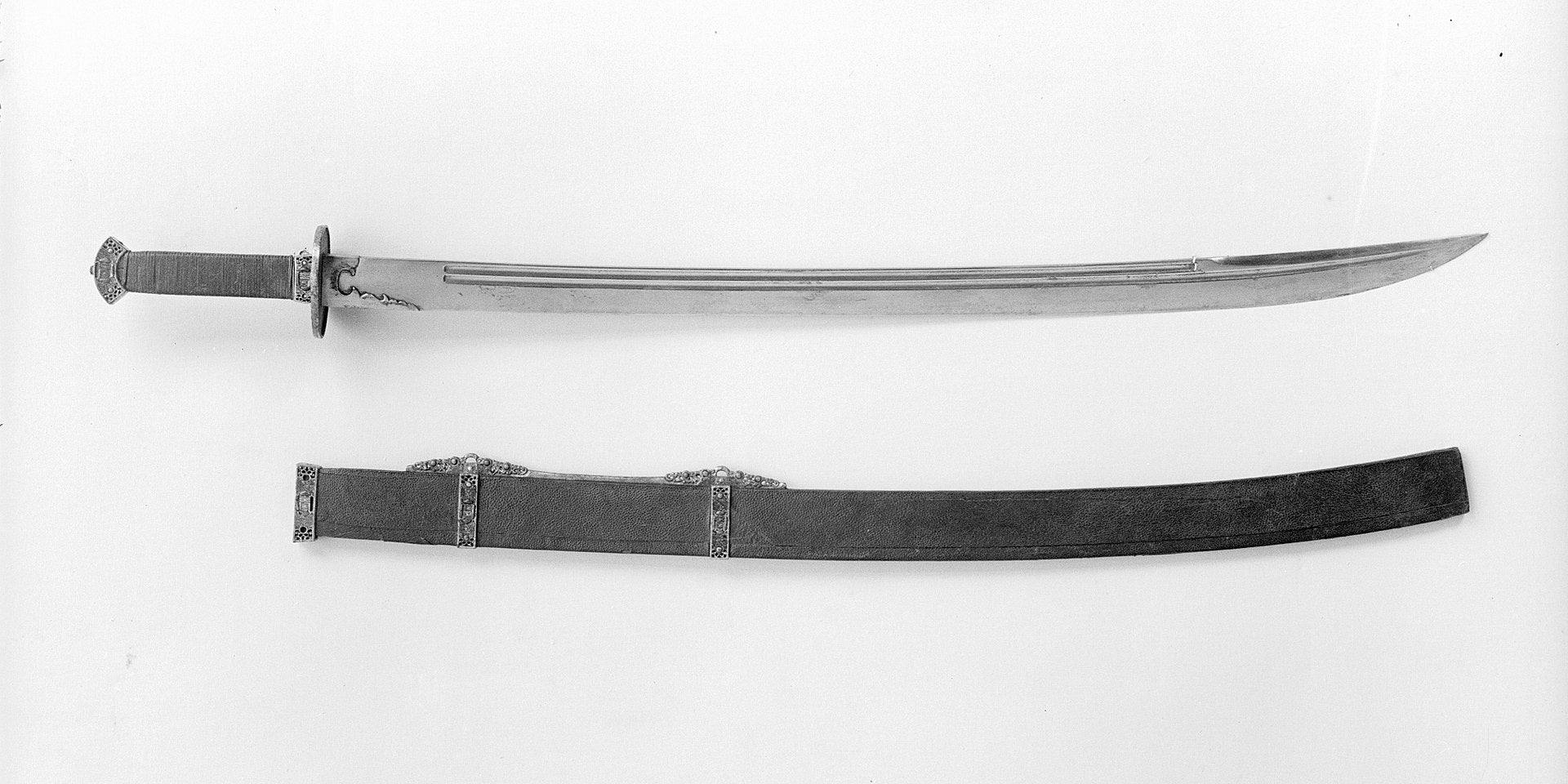

The liuyedao is a traditional Chinese sword that originated during the country's Ming Dynasty. As shown in the photo to the left, it featured a long, curved blade that was synonymous with other popular Chinese swords at the time. However, the liuyedao has a few unique characteristics that make it stand out, some of which we're going to discuss in this blog post.
The Liuyedao's Design
Also known as the willow-leaf saber, the liuyedao was typically designed with a moderately-curved, straight-edged blade. Countless other Chinese swords produced during the Ming Dynasty also featured a curved blade, but bladesmiths designed with the liuyedao with a more prominently curved blade to increase its cutting and slashing power. By increasing the curvature of the liuyedao's blade, this traditional Chinese sword was more effective at performing cutting and slashing attacks. The downside, however, is that it reduced the liuyedao's thrusting power. Nonetheless, bladesmiths and warriors alike found that the trade off of increased cutting and slashing power for less thrusting power was well worth it, so they continued to create and use the liuyedao throughout China's Ming Dynasty as well as Qing Dynasty.
In terms of size, the liuyedao wasn't too small, nor was it too big. Different bladesmiths designed the liuyedao in different lengths, with 36 to 39 inches being the most common length in which this traditional Chinese sword was made. Assuming it was made of steel -- which nearly all liuyedao were -- this allowed for a lightweight design weighing just 2 to 3 pounds.
How the Liuyedao Was Used
The liuyedao was used like other traditional Chinese swords at the time. Warriors would carry it in a sheathe attached to their back or waist sash, and when confronted with an enemy, they would use it to perform slashing, cutting, thrusting and other common attacks.
It's important to note that the liuyedao was used by both infantry and cavalry warriors. Its moderate length made it a versatile weapon that could be used in a variety of scenarios. Infantry would use it like any other sword, performing the aforementioned attacks, whereas cavalry would use the liuyedao to perform slashing and piercing attacks while on horseback.
In addition to real-world combat, the liuyedao has also been used extensively in traditional Chinese martial arts. Several schools of Chinese martial arts include the liuyedao in their curriculum, allowing practitioners to train using this traditional Chinese sword.

What the habaki, tsuba, tsuka, menuki, fuchi, kashira and saya actually do, and how to choose each one when you design a custom katana. Illustrated with museum pieces from the Metropolitan Museum of Art.