
Your Cart is Empty
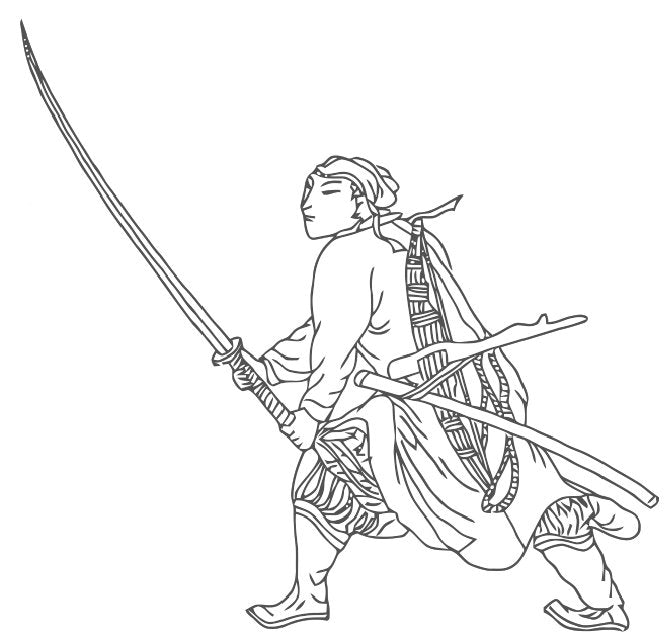

Both Japan and China have produced some of the world's most widely recognized swords. The Asian countries have a long history of bladesmithing dating back several centuries. And while they share some common characteristics, traditional Japanese swords are different from traditional Chinese swords in several ways, some of which we're going to explore in this blog post.
Age
It's believed that China produced swords before its neighboring territory of Japan. Archeological findings suggest that some of the first Chinese swords were forged during the country's Shang Dynasty (1600 B.C. to 1046 B.C.). In comparison, Japan's bladesmithing art can be broken down into several periods:
Materials
Traditional Japanese swords were often made using different materials than Chinese swords. During Japan's early days of bladesmithing, conventional materials like bronze and iron were used. Around the turn of the Kamakura period (1185 to 1333), however, Japanese bladesmiths began using high-carbon steel with which to forge their swords, resulting in stronger and more versatile weapons. China used similar bronze and iron materials to make swords, but the region never progressed to the use of advanced materials like Japan's high-carbon tamahagane steel.
Design
It wasn't uncommon for traditional Chinese swords to feature a double-edged blade. In fact, there was even an entire classification used to describe traditional Chinese swords with a double-edged blade: jian. Granted, Japan also produced double-edged swords, though most swords produced here featured a single edge.
Size
Traditional Japanese swords were usually longer than those made in China. According to Wikipedia, the average length of traditional Chinese swords was 27 to 43 inches. In comparison, most traditional Japanese swords were over 50 inches. The longer blade allowed samurai warriors to engage their enemies from a safe distance, proving instrumental in battles.
Quality
In terms of quality, traditional Japanese swords are the clear winner. Today, Japan is known throughout the world as being the leading producer of high-quality swords -- and for good reasons. Since its feudal years, bladesmiths in Japan has produced the finest swords using high-end materials and craftsmanship. While other regions have mass-produced swords, Japan has focused on quality over quantity. The end result is superior swords that simply aren't found elsewhere, including China.

What the habaki, tsuba, tsuka, menuki, fuchi, kashira and saya actually do, and how to choose each one when you design a custom katana. Illustrated with museum pieces from the Metropolitan Museum of Art.